To conclude Climate Week NYC, ten farmers from around the world took the stage to share deeply personal, moving, inspirational stories of resilient food systems during “A Night of Storytelling Honoring Our Farmers: Food and Agriculture Storytelling.”
The Summit was presented alongside Niman Ranch and the Broadway Green Alliance. Watch the full livestreamed event on Food Tank’s YouTube channel.
“Every farmer that we can keep on the land is another reason for a town to keep going; for a gas station to stay open; for a church to stay open; for a school to stay open,” says Ron Mardesen, a third-generation hog farmer from Elliott, Iowa, who has raised pigs with Niman Ranch for over 20 years using humane and sustainable practices.
The evening was emceed by Academy Award-Nominated Actress Stephanie Hsu. Best known for roles in “Everything Everywhere All At Once” and “The Marvelous Mrs. Maisel,” Hsu is a longtime food advocate and self-described “nerd for soil health and rege
nerative farming practices,” she told the sold-out crowd.
“If there’s anything I know about farmers, they can really make any magic possible with just a seed,” she says.
First onstage was Sea Matías, a regenerative farmer and community organizer growing culturally relevant crops at Serra Vida Farm, who shared powerful lessons from their grandmother.
“My abuela María…taught me that food isn’t just sustenance—it’s dignity. It’s love,” Matías says. “Land, like love, is not meant to be owned. It’s meant to be shared.”
Not everyone will become a farmer, Matías says, but everyone has a responsibility to care for the land and for one another.
“We aren’t separate from the environment,” Matías says. “We are the environment.”
Amid a precarious political moment for immigrants, people of color, and other marginalized groups, community is more important now than ever, says Karen Washington, an Activist, Farmer at Rise & Root Farm, and Co-Founder of Black Urban Growers.
There’s a lot of chaos and a lot of fear out there, but we have to hold onto hope. At this point in time, it’s clear that we must find community,” Washington says. “You see a person not being fed, you feed them. You see a person not being housed, you house them. You see a person not being clothed, you clothe them.”
“If you’re advocating for the rights of animals and plants and seeds, then advocate for people who look like me to be part of this farming community,” she says. “When we talk about agriculture, what we have lost is culture.”
Like Matías, other young farmers also learned from previous generations and felt a pull to give back to the land that raised them.
“Growing up as an only child, the cows and the farm were my world,” says Olivia Fuller, a fourth-generation farmer at Fuller Acres in upstate New York, raising pastured livestock and maple products on protected land to build a resilient and diversified future.
For Sabrina Servais, Assistant Herd Manager at her family’s Organic Valley member dairy farm in Wisconsin, this is exemplified by the Tears for Fears song “Everybody Wants to Rule the World.” Onstage, Servais sang the opening: “Welcome to your life; there’s no turning back.”
“What do we sacrifice when we choose money and power over everything else, over our passions? The earth? Its people? Our food systems?” she says. “There are billions of people in this world, and if we each do one little thing we can change the world.”
After growing up on her family’s pasture pig farm, April Wilson moved to a bigger city, but pig farming was always central to her identity, she says. The family’s farm was struggling, and her father was considering selling it—so Wilson took it over. Today, she’s a third‑generation hog and chicken farmer who continues her family’s ranching legacy at Seven W Farm, partnering with Niman Ranch.
“Pigs are incredible animals, and in my book, they are worth fighting for,” Wilson says. “Today, the struggle to keep pasture pigs is ongoing, but through the work my family is doing, we’re working to make sure (our farm) stays regenerative for the next generation.”
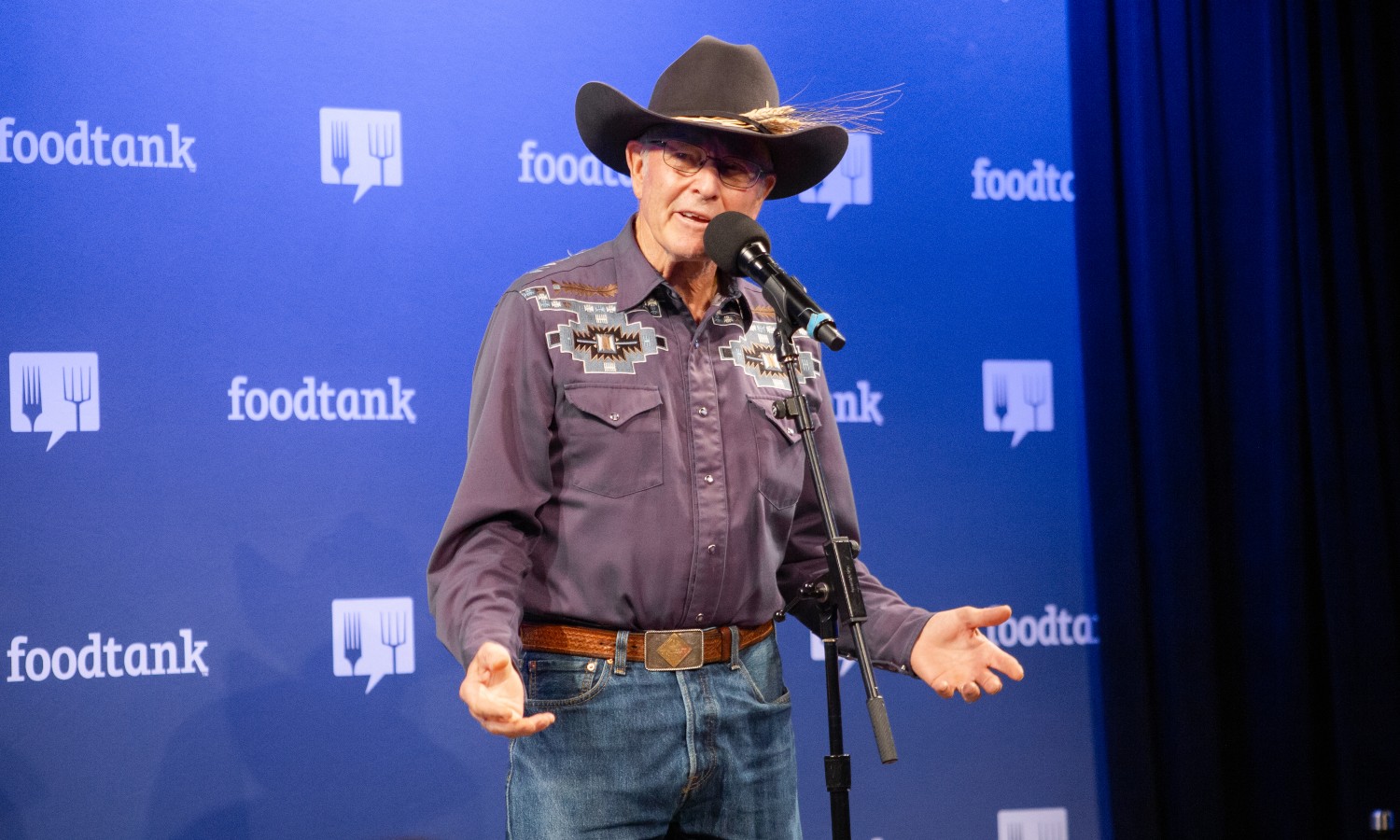
Several farmers also shared personal experiences of transforming their own lands into regenerative farms. Trained as a conventional wheat farmer in Montana, Bob Quinn was inspired nearly four decades ago to rethink his approach and embrace organics—“going from something that was becoming more dead to something that was becoming more alive.”
“If I look positively to the future, I see one filled with good food choices and good health, and that starts with how the farmers grow our food,” Quinn says, wearing a hat with a sprig of kamut, an ancient grain whose revitalization he pioneered. “We should be growing food that heals. Regenerative organic, minimally processed food is our best medicine. And farmers should be paid like pharmacists when they grow food that heals.”
Brian Mattingly is Director of Star Hill Farm Operations for Maker’s Mark, where he manages 1,100 acres of regenerative farmland in Kentucky. For him, learning that agriculture is more than planting and harvesting—that the future of farming was not just maintaining the status quo but regenerating soils to be healthier than you found them—was a revelation.
“Healthy souls produce the most nutrient dense foods, not to mention the most flavorful whisky,” he says. “We’re never going to make a big difference if we don’t first make a small one.”
Farmers also must rely on one another to build a more nourishing future. In County Kerry, Ireland, dairy farmer William Dennehy is pushing back against the isolation of farming by building a multigenerational community of farmers to share experiences and expertise, including nature-based solutions to build back biodiversity.
At the Samad Gardens Initiative in Connecticut, Azeem Zakir Kareem brings people together not only around food but also music, as a rapper who’s performed with Public Enemy and is a Wu Tang affiliate.
Building a community of regenerative farmers requires support, income, and consumer education, says Patrick Holden, farmer and Founding Director of the Sustainable Food Trust, whose 300-acre farm is the longest-running organic dairy farm in Wales. Over the past five years, he’s built up part of the farm into an educational platform to help people of all ages understand regenerative agriculture.
In farming, there’s no such thing as being self-sufficient, says Caroline Radice, co-owner of Black Dog Farm & Catering in Northern California and co-founder of the Good Farm Fund, supporting small farmers with microgrants and EBT access.
“Farming and running a small business still feels completely magical, audacious, and revolutionary,” Radice says. “I hope you grow a garden. I hope you share a meal with your neighbor. I hope you find joy and laughter even in the face of great challenges.”